
How to Use Classes
Classes are used in nonprofit accounting to track why money was earned or spent, helping organizations clearly report how resources support their mission. Classes are functional categories that describe the purpose of an expense or the source of revenue. Not only is this required for nonprofit accounting, but it also makes it easier for you to run reports and glean insights about your spending or fundraising. For example, want to know how much the annual gala brought in this year compared to last year? That's easy to do with classes.
Learn more about how Accounts, Classes, and Tags work together.
What are classes in nonprofit accounting?
Classes describe the why behind a transaction—showing the program, activity, or function the money supports. They provide a way to label income and expense transactions so you can see how money is being used across your organization.
Importantly, classes are used to track expenses for your Statement of Functional Expenses and IRS Form 990. Using your MonkeyPod's Income & Expense by Class report or the transaction search features, classes can also help you answer questions like:
- How much did we spend on programs vs. administration?
- What did a specific program or event actually cost?
- How are expenses distributed across departments or initiatives?
Where do I find classes in MonkeyPod?
To find your classes select My MonkeyPod. Under the MonkeyPod Setup section, select Classes / Programs.

From here you'll see all of your organization's classes and subclasses

What are the standard classes?
By default, your MonkeyPod uses the three standard classes that map directly to the required functional expense categories for nonprofit accounting:
- Fundraising
- Programs and Services
- Management and General
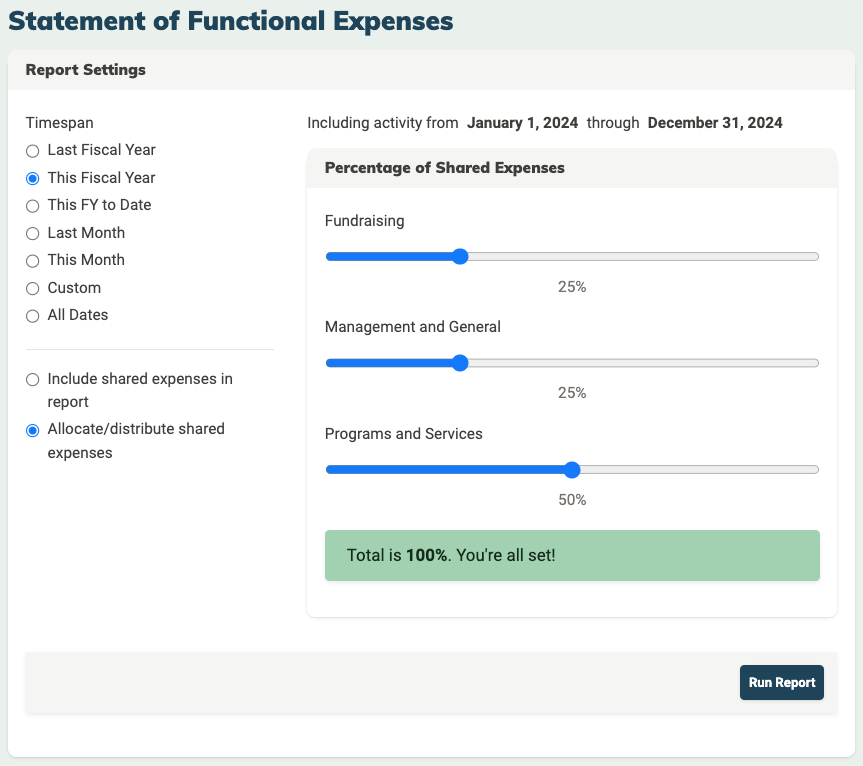
MonkeyPod also offers an additional choice when selecting a class for a transaction: Shared Expenses. 'Shared Expenses' isn't a class itself, but rather a special holding pen for transactions that don't really fit neatly into the other three classes. When generating your Statement of Functional Expenses in your MonkeyPod, you can allocate those shared expenses across the other three classes as appropriate. Learn more about your Statement of Functional Expenses.
When would I create a subclass?
Classes are for categories that are permanent(ish) parts of your organization's accounting. You’d want to create a subclass when you need more detail than your top-level classes provide, but you don’t want to complicate your chart of accounts or create separate funds.
Examples of good reasons to create a subclass:
- You expect the activity to recur and want consistent reporting over time
- You run multiple programs and want to compare their costs
- You want to track the true net results of a specific event or initiative
So, for example, an education foundation might have subclasses under Programs and Services for:
- Student Grants
- College & Career Programming
Or Fundraising subclasses for
- Annual Gala
- Online Giving
This lets the organization report total program spending and drill down into each program’s costs and revenue. And all of it still rolls up cleanly into the Programs and Services class for your Form 990 and audited statements.
Tip! Avoid creating subclasses for one-time events unlikely to repeat, or data that won’t be reviewed or acted. That'll just clutter up your reports. To track these things, a tag works best!
In the screenshot below, you can see an example of subclasses under Programs and Services. These would be standing programs that are part of the mission that this organization might have year after year.

How do I create a class?
To add a new class, go back to your list of classes by selecting Classes / Programs from the My MonkeyPod menu. Then, select Add a Class.

All new classes will be subclasses of the standard classes (or another subclass). So first select a parent class, then enter a name and optional description, and select Save.

Adding a subclass directly from the main list
Alternatively, you can select the Create sub-class icon for the intended parent class in your list of classes, and then just enter the name and description for the new subclass.

How do Shared Expenses work?
Shared Expenses is a special MonkeyPod class. You can think of it as a big bucket of transactions that you can then allocate across the other three standard classes when generating your Statement of Functional Expenses.
For example, you may have a lot of expenses that don't quite fall under Management and General, Programs and Services, or Fundraising, but they do all fall into those categories at the same percentages.
For example, the executive director's salary could be recorded with the Shared Expenses class, and later distributed across the 3 standard classes when you generate your Statement of Functional Expenses.
Merging and archiving subclasses
If you find you no longer need a subclass that you have created, you have a couple of choices.
Merging classes
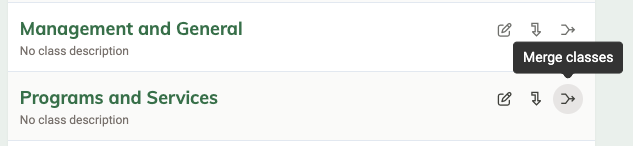
Use the option to merge classes if you want to combine two classes. Select the Merge icon for the class that you would like to retain.
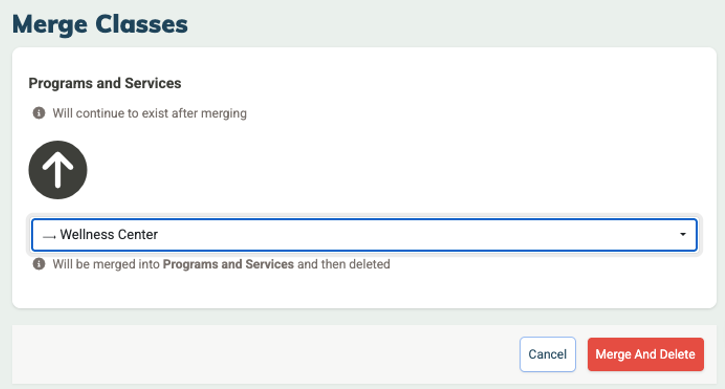
Then you'll be prompted to select the class that you want to merge. This will remove the merged class from all currently classified transactions, and replace it with the class it's being merged into. Be certain this is what you want to do as it cannot be undone!
Select Merge and Delete to complete the process.
Archiving classes
If you no longer need to use a class for categorizing transactions, you can choose to archive it. This will also remove it from your reports and the transaction search filters. Choose the De-activate/archive option next to the class in the list of classes.
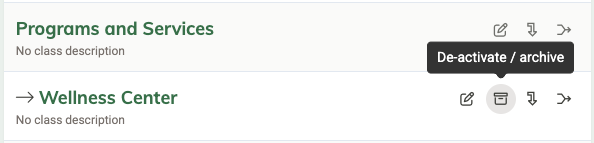
If you later change your mind and wish to restore it, choose the option to show your inactive classes in the class list, and then select the Reactivate/restore option.
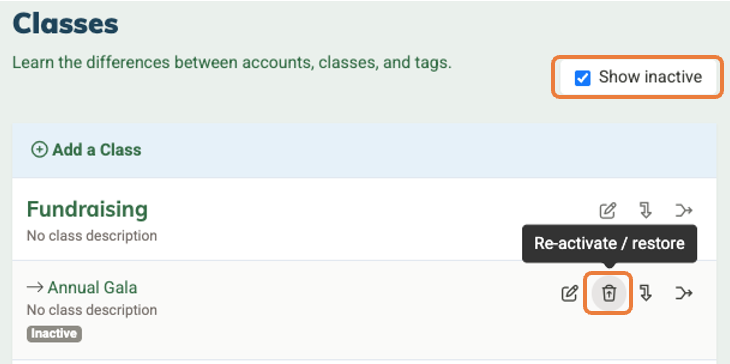
Note: An inactive class will still be displayed in a report if it (or one of its subclasses) contains activity in the reporting period.
Frequently Asked Questions
How can I tell if I've done a good job of setting up my classes to fit my organization's financial data?
Take a look at How to Run a Health Check on Your Financial Setup.
Why can't I delete Fundraising, Management and General, Programs and Services, or Shared Expenses?
MonkeyPod keeps these because they are directly tied to your 990. You can add and remove subclasses, but these four are here to stay!